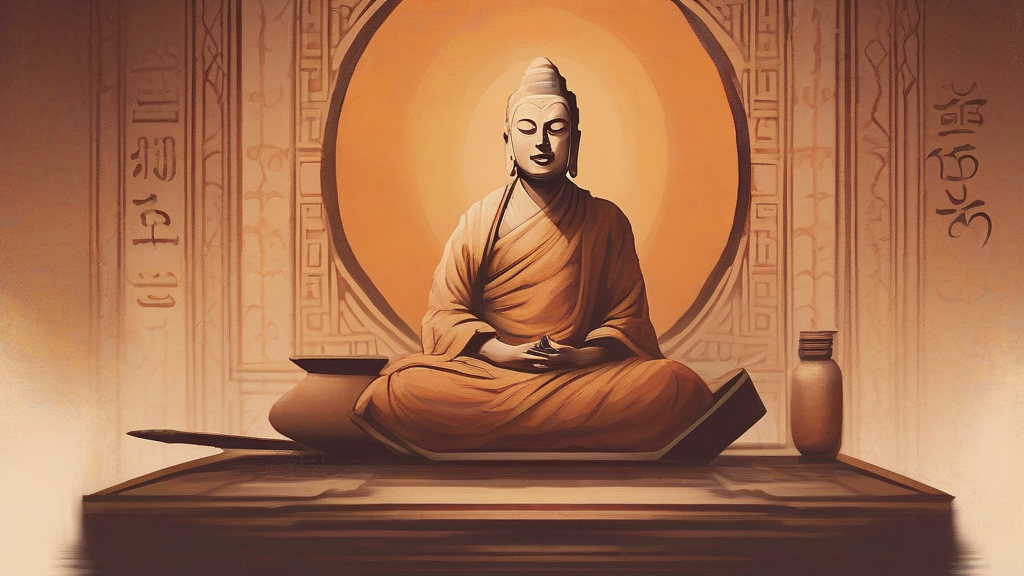
What does sutra mean?
A sutra is a type of sacred text or aphorism that originated in ancient India and is still studied and revered today in Eastern spiritual traditions. The word sutra comes from the Sanskrit language and means 'thread' or 'string', possibly referring to the way the teachings are strung together like beads on a thread. Sutras can be found in Hinduism, Buddhism, and Jainism, and typically contain concise and authoritative teachings on ethics, meditation, and spiritual growth. They are often attributed to revered sages or spiritual leaders and are considered essential reading for those seeking spiritual enlightenment. Sutras can be short or long, and may take the form of poetry, prose, or a combination of both.
A concise and authoritative text or aphorism.
"The Buddhist sutras contain teachings on ethics, meditation, and wisdom."
Often used in Eastern spiritual traditions.
A thread or string, especially one used for sewing or binding.
"The doctor carefully closed the wound with a precise suture."
This sense is more commonly used in medical or technical contexts.
The plural form sutras is used when referring to multiple texts or aphorisms.
"The Buddhist scriptures contain many sutras that are still studied today."
Reviewed by Deb Chak, Editor. AI-assisted content curated by RJS Tech Solutions LLP.
Etymology of sutra
The word sutra comes from the Sanskrit language, in which it is written as सूत्र (sūtra). The term is derived from the root 'siv' meaning 'to sew' or 'to thread', and refers to a thread or string. In ancient India, sutras were used as a way of condensing and transmitting complex teachings and ideas in a concise and memorable form.
Usage notes
The term sutra is often used in Eastern spiritual traditions, particularly in Hinduism, Buddhism, and Jainism. It can refer to a specific text or a genre of literature.