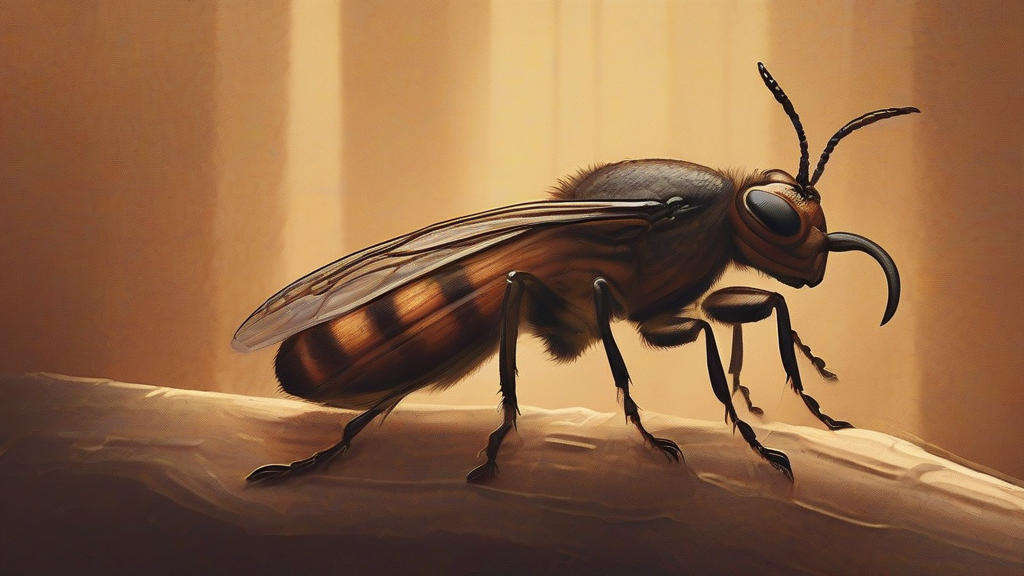
What does aculeate mean?
The term aculeate refers to something that has a sting or pointed structure, often used to describe certain insects or their appendages. In entomology, aculeate is used to classify insects that possess a stinger, such as wasps, bees, and ants. These insects use their pointed structures for defense, capturing prey, or other purposes. The word aculeate is derived from the Latin word 'aculeus,' meaning 'sting' or 'prickle.' Understanding the aculeate nature of certain insects is essential for appreciating their behavior, ecology, and role in the environment. The term is primarily used in scientific and technical contexts, providing a precise way to describe the morphology and function of these insects' distinctive features.
adjectiveHaving a sting or pointed structure, typically referring to certain insects or their appendages.
- Having a sting or pointed structure.
- Referring to certain insects or their appendages.
"The aculeate wasp delivered a painful sting to the unsuspecting victim."
"The aculeate nature of the bee's stinger made it a formidable defense mechanism."
"The entomologist studied the aculeate appendages of various wasp species."
Reviewed by Deb Chak, Editor. AI-assisted content curated by RJS Tech Solutions LLP.
Etymology of aculeate
The word aculeate originates from the Latin 'aculeus,' meaning 'sting' or 'prickle.' It has developed through Middle English and is related to other English words such as 'acuminate' and 'acuity,' which also derive from 'acus,' the Latin word for 'needle.' The term has been used in English since the 17th century to describe insects with stingers or pointed appendages.
Usage notes
Typically used in scientific or technical contexts, especially in entomology or biology.