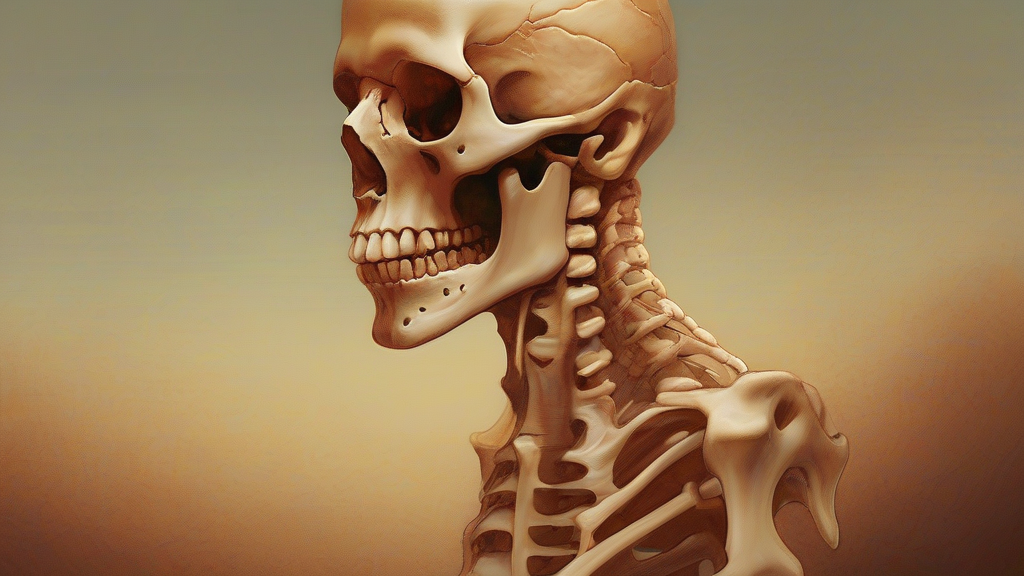
What does ethmoid mean?
The term ethmoid refers to the ethmoid bone, a spongy bone located in the nasal cavity that forms part of the eye socket and contains the ethmoid sinuses. This bone plays a crucial role in the structure of the nasal passages and is a common site for sinus infections. The ethmoid bone is a complex, honeycomb-like structure that is essential for the proper drainage and ventilation of the nasal cavity. Understanding the ethmoid bone and its functions is important in fields such as anatomy, medicine, and surgery. The ethmoid bone is a key landmark in nasal and sinus surgery.
Relating to or denoting the ethmoid bone.
"The ethmoid sinuses are located within the nasal cavity."
Used to describe structures or conditions related to the ethmoid bone.
The ethmoid bone itself, a spongy bone in the nasal cavity.
"The ethmoid bone forms part of the nasal cavity and the eye socket."
Not commonly used as a countable noun, but may be used in certain medical or scientific contexts.
Reviewed by Deb Chak, Editor. AI-assisted content curated by RJS Tech Solutions LLP.
Etymology of ethmoid
The word 'ethmoid' comes from the Greek words 'ēthmos', meaning 'sieve', and 'oeidēs', meaning 'like'. This refers to the bone's spongy, sieve-like structure. The term has been used in anatomy since the 17th century to describe this specific bone in the nasal cavity.
Usage notes
In anatomy, the term 'ethmoid' refers specifically to the ethmoid bone or structures related to it. The term is used in medical and scientific contexts.